

Patagonia, the clothing company, is suing drag queen Pattie Gonia for trademark infringement. And it is the most divisive, attention-grabbing trademark case I have seen in years. Here is the thing, though: the most interesting part of this case is not who wins. It is the fact that this whole thing probably did not need to happen at all. I have been giving takes on this case and getting heat from both sides. So let me lay out what is actually going on, legally speaking, and then tell you what it means for you
The Internet Has Chosen Sides
Before we get into the law, here is a quick summary of where people are landing:
Team Patagonia Says...
They had to sue or risk losing their trademark
Pattie Gonia broke an agreement they had
She's selling clothes under a confusingly similar name
She filed a trademark application that threatens theirs
Customers have actually been confused
You can't use someone's brand, then cry foul when they push back
Team Pattie Gonia Says...
Patagonia is suing in bad faith
There was never a real agreement
The two brands don't compete for the same customers
She's a drag queen doing parody. It's protected
No one is actually confused
This is a corporation trying to bully an activist
So who is right? Like almost everything in law -- and unlike almost everything people are saying online -- it depends. But more importantly, this situation had the potential to be a mutually beneficial partnership. For whatever reason, it became a lawsuit instead.
Patagonia's Legal Position: They have a good argument
The Duty to Enforce and Police
Patagonia has publicly said they had to file this suit to protect their brand.[1] And that is actually kind of true. In trademark law, there is a real principle called the duty to enforce police (I hate that its called that). If you let others use your trademark without restriction, you can weaken or even lose your trademark rights entirely. You cannot just sit back and let people use your mark freely.
Their complaint[2] points to four main things:
Pattie Gonia's trademark application for apparel.
She is selling merch under the Pattie Gonia name.
Documented examples of consumer confusion.
An alleged agreement Pattie Gonia then broke.
Confusion and Dilution
Most trademark lawsuits come down to two things:
Confusion: either "people think your stuff is my stuff" (passing off) or "people think I endorse or sponsor you, when I don't." Trademark rights are generally tied to specific goods and services. Which is why two companies can share the same name as long as they operate in different industries.
Dilution: "We are famous. You do not get to trade off our name." Famous marks get extra protection regardless of whether consumers are actually confused.
If you just read those facts and that standard, it seems pretty straightforward. They own a trademark, someone else used something pretty similar in how it sounds
Pattie Gonia's Counterarguments: Also Not Nothing
Before you write off her defense, consider these points:
The USPTO examined Pattie Gonia's trademark application and did not flag any conflicts with Patagonia.
Her merch is sold through entirely different channels to different customers than Patagonia's technical outdoor gear.
What Patagonia characterizes as a "broken agreement" looks more like a demand letter in legal terms. Meaning, it wasn’t a collaboration.
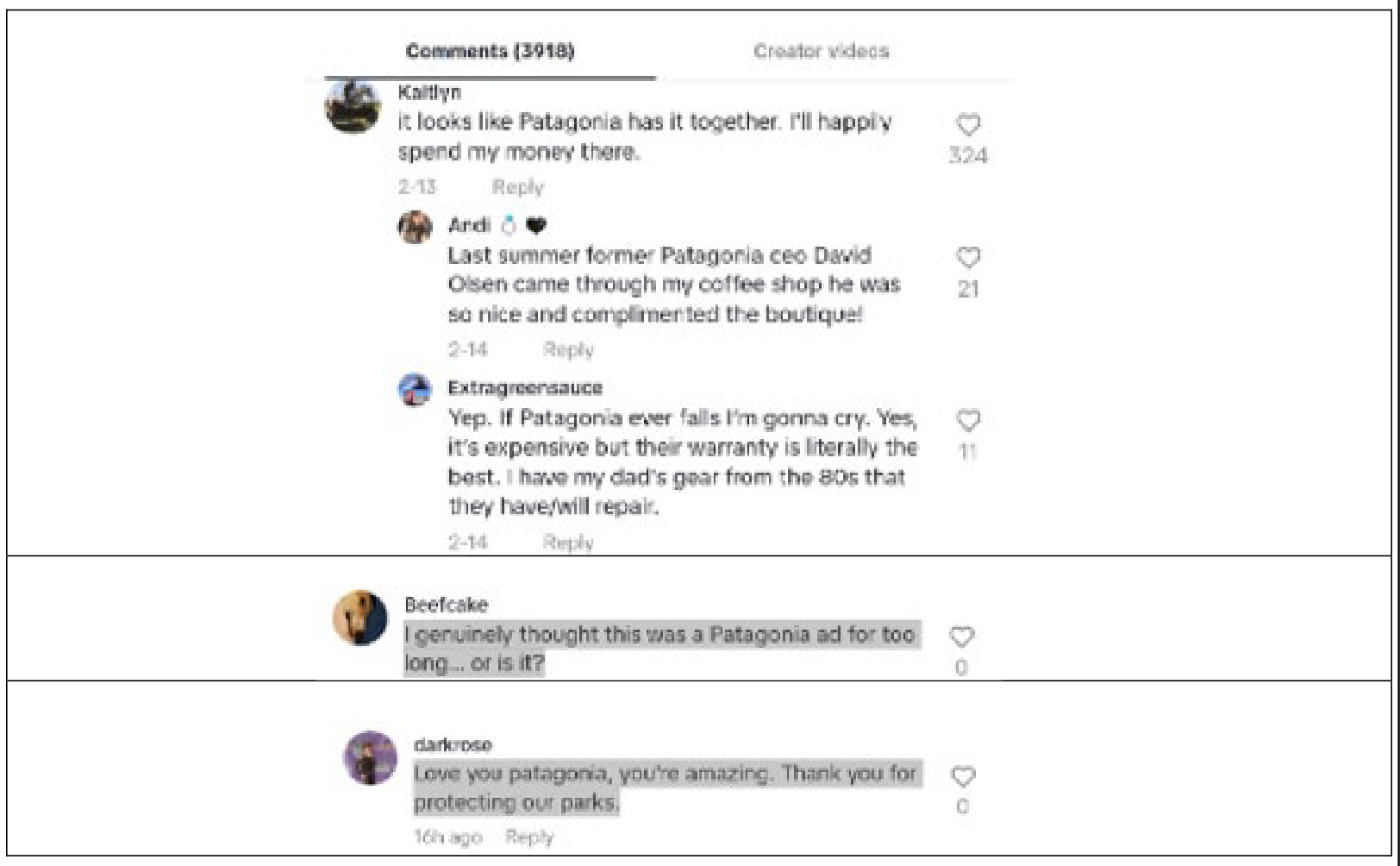
Here is the wild part: the consumers in the complaint who were "confused"? They were going to Patagonia[3] because they thought Patagonia and Pattie Gonia were working together. They were not buying Pattie Gonia's merch by mistake.
The Part That Makes This Case Weird
In a typical trademark infringement case, the harm flows in one direction: consumers buy from the infringer instead of the original brand, costing the original brand sales and reputation. But that is not what was happening here. The alleged "confusion" was actually driving people toward Patagonia, not away from it. Pattie Gonia was functioning as free marketing for the brand now suing her.
Screenshot of from Patagonia’s complaint. (blurring is present in original)
That is a very unusual set of facts for a trademark case. Which leads me to how any why this lawsuit could’ve been an email. Trademark enforcement does not require litigation. You can satisfy the duty to police your mark by entering into a formal agreement that sets the terms of use. Given that Pattie Gonia was benefiting Patagonia's brand awareness and seemingly driving people to buy from Patagonia, an official sponsorship, affiliation, or licensing deal would have made sense.
Usually, in a trademark infringement case where the defendant (person being sued) is causing people to incorrectly think that they’re sponsored by the plaintiff (person suing), the harm is that people are buying stuff from the defendant because of that, or thinking poorly of the plaintiff. But here, people seemed to like Patagonia more, and want to buy from them more…
So why not just… make the relationship official? With a few emails. That would have
Satisfied Patagonia's enforcement obligation.
Given Pattie Gonia clarity about what she could and could not do.
Generated goodwill and positive PR for Patagonia with a highly engaged audience.
Costs a fraction of what litigation fees will cost both sides.
According to the complaint, that offer was never seriously made. What was made was, functionally, a demand. Now both parties are spending enormous sums on legal fees, getting roasted on social media, and digging in their heels. Neither side looks great.
So why no agreement?
For whatever reason, the parties just didn’t seem to want to work together. At the beginning of the email exchange, Patagonia laid out ground rules for Pattie, which they later clarified to mean that she wasn’t allowed to use any similar logos or marks and not to use the term “Pattie Gonia” on any products.
Pattie also sent an email agreeing to some, but not all, of those demands. She also let Patagonia know that she and her team were uninterested in being associated with Patagonia, largely due to Patagonia’s past military and police contracts.
So Who Is Actually Right?
Patagonia was within its legal rights to sue.[5] Trademark holders have to enforce their marks, and Pattie Gonia's brand, which included a trademark application for apparel. Created real legal exposure for them.
Pattie Gonia poked a bear. Using a name and logo that are quite similar to a famous brand, especially while selling clothing, creates genuine legal risk regardless of intent. It might be fair use parody as she says in the complaint, But fair use is a defense, not a shield.[You can invoke it after you have been sued. You cannot use it to prevent being sued in the first place. If you poke the bear, be ready for the fight.
What This Means for You
If you have an established brand you can and should enforce your trademark. But a lawsuit is not your only option. If someone is using your mark in a way that is actually helping your brand, there may be a deal worth making. Talk to a trademark attorney who can help you weigh enforcement options against business strategy.
If you have a subversive or parody-based brand: If it’s helping out the company, and they do offer a collaboration agreement, consider it. A mutually beneficial relationship is always better than a lawsuit.
But if you want to stand on business, know that "fair use" is a legal defense you argue in court after you have already been sued and are paying legal bills.[7] Before you build a brand around riffing on someone else's trademark, get a consult with a lawyer who can tell you where the lines actually are.
For everyone: Litigation is expensive, slow, and unpredictable. If there is a deal to be made that protects your interests, it is almost always worth exploring before you file or respond to a complaint.
If you have brand questions and want to consult with an attorney who knows ball, hit us up.
If you want to learn more about brands and branding, get the free guide for creative troublemakers.
* * * This post is for informational purposes only and does not constitute legal advice. For specific trademark questions, consult a licensed attorney.
References
[1]Patagonia's public statement on the lawsuit
[3]Id. at page 4. The complaint identifies instances where consumers contacted Patagonia believing the two brands were affiliated.
[4]As noted in the complaint, Patagonia did not offer a formal affiliation or licensing agreement. The correspondence was structured as a demand for compliance, not a proposal for mutual benefit.
[6]Pattie Gonia's Answer and Affirmative Defenses . Also take a look at our other blog about Pattie’s Parody Defense.
